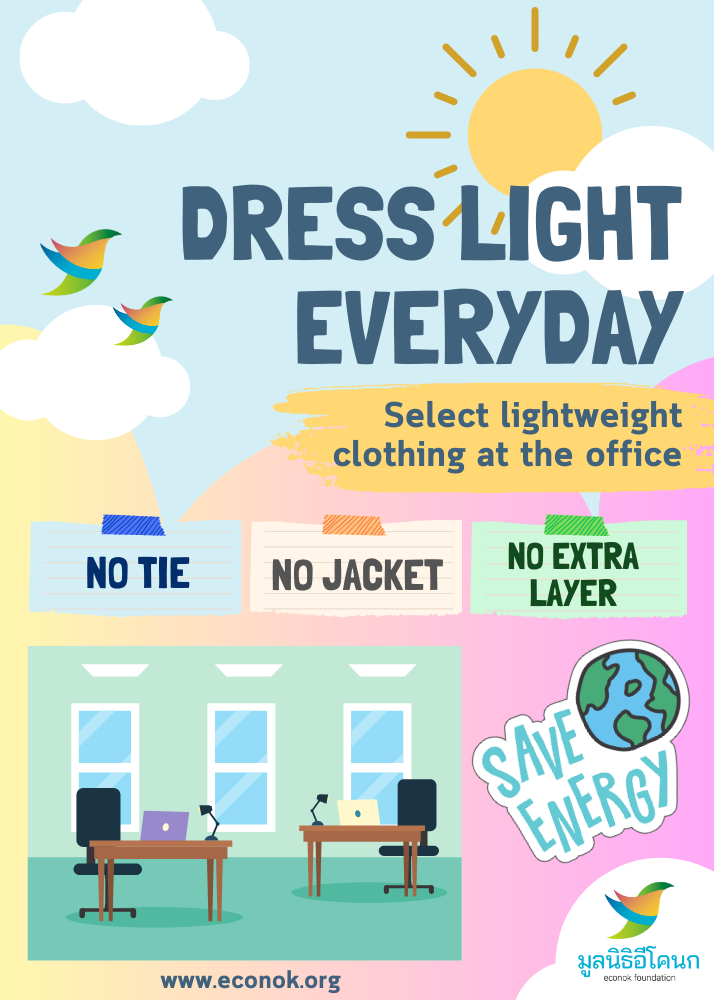
Dress Light Every Day
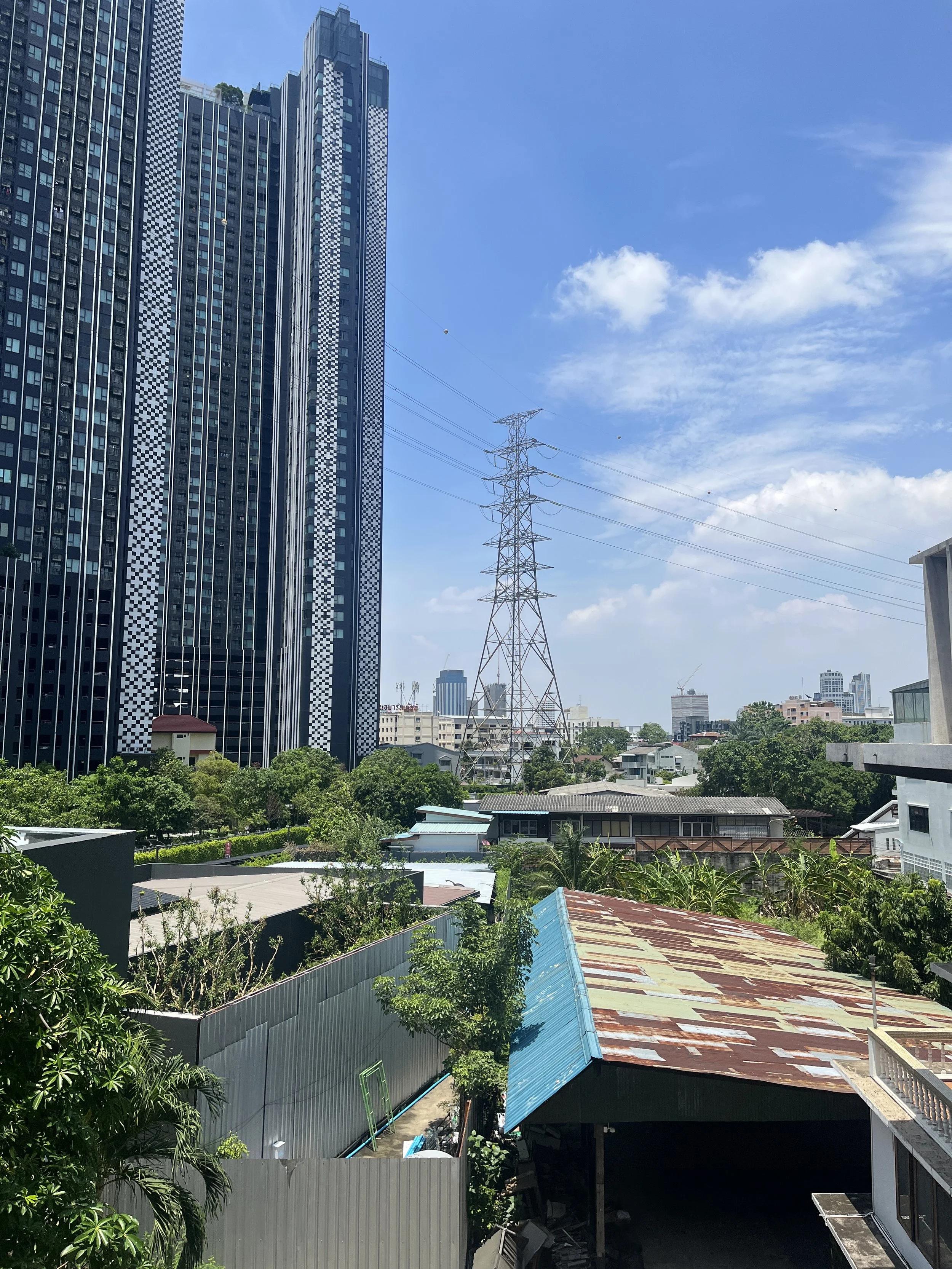
April is the hottest month in Bangkok, with temperatures averaging at 30.5 °C (87°F), while December is the coldest, with temperatures around 26 °C (79°F).
In most parts of Thailand, there are generally three seasons: the wet season, the cool season, and the hot season. However, some Thai people playfully describe them as 'Hot🥵, Hotter🥵🥵, Hottest🥵🥵🥵.'
Is it still 'cool' to wear a suit and tie in tropical climates? Many office workers in Bangkok layer up and even wear winter-like clothing because the office is so freezing. Air conditioners are vital for living comfortably and working efficiently. However, it's unnecessary to keep buildings and rooms excessively cold, requiring additional layers because a significant amount of energy consumption can be saved by turning up air conditioners by just 1°C.
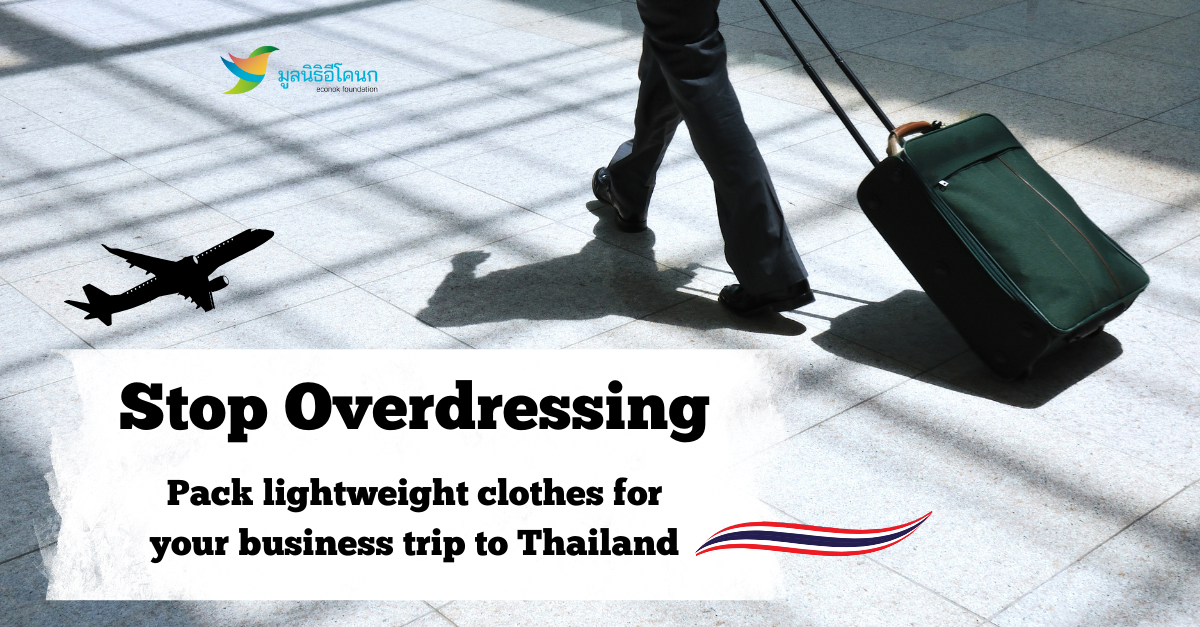
We strive to establish a more sensible business dress code. To achieve this, we propose implementing a "Dress Light Every Day" scheme, where everyone wears short sleeves or light shirts in the office, and a "Dress Light Conference" approach, where the conventional business dress code is not required for any conference. In addition, we recommend to the Bangkok offices of international companies that the traditional business dress code is not necessary for business travelers coming to Thailand.
These days, global warming is a hot topic, with scientists, politicians, and environmentalists all joining the conversation. We believe these stakeholders play a crucial role in helping ordinary people, like us, realize the necessity of addressing such a serious and urgent issue.
However it doesn't sit well with us that, in many cases, environmental discussions in hot countries are held in excessively air-conditioned with conventional dress codes. We recognize that some specialists emphasize the limited impact of clothing choices on global warming, and we perceive this perspective as a double-edged sword in the real world. Discussions and policy decisions should be grounded in scientific data, but it's essential to recognize that factors beyond scientific data are vital to inspire and convince people.
Wearing suits and layering up in hot climates also has environmental downsides. Suits often require dry cleaning, a process that is not only energy-intensive but also involves harmful chemicals. Wearing extra layers means fewer clothes fit in each wash, forcing more laundry cycles and wasting water, detergent & fabric softener, and energy. It's time to reconsider the necessity of maintaining business formal attire and wearing winter clothing in tropical regions. Dressing light is not just smart-it’s respectful to the climate.